
The only camper van with a hybrid sheet-metal and fibreglass body: insulation with no equal in its class.
Petrol, or bifuel petrol/LPG if you want it: the only bifuel camper there is, with a nine-speed automatic and over 1,300 km of combined range.
Gross weight 2,750 kg: it drives on a standard category B licence.
Key features
The only petrol camper, or bifuel petrol/LPG
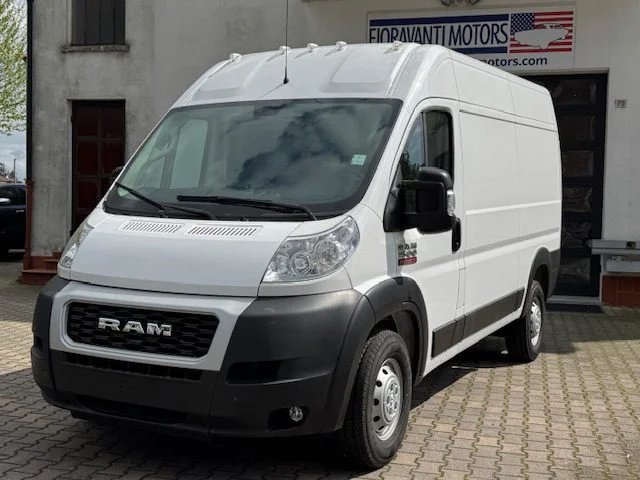
Utopia is the only camper natively engineered for petrol, or for bifuel petrol/LPG, and next to a current Euro 7 diesel the difference shows every single day. No AdBlue to top up and no tank to keep an eye on. No particulate filter, no SCR catalyst, no regeneration cycle to complete and no engine management going into limp mode after too many short trips: the exhaust of an Otto-cycle engine is simple and asks nothing of you. With LPG you drive into every European low-emission and restricted-traffic zone without a second thought - the zones diesels are the first to be shut out of, today and even more so tomorrow. And with both tanks full you cover over 1,300 km of combined range: where you stop is your decision, not the fuel gauge's.
The only camper van with a hybrid body
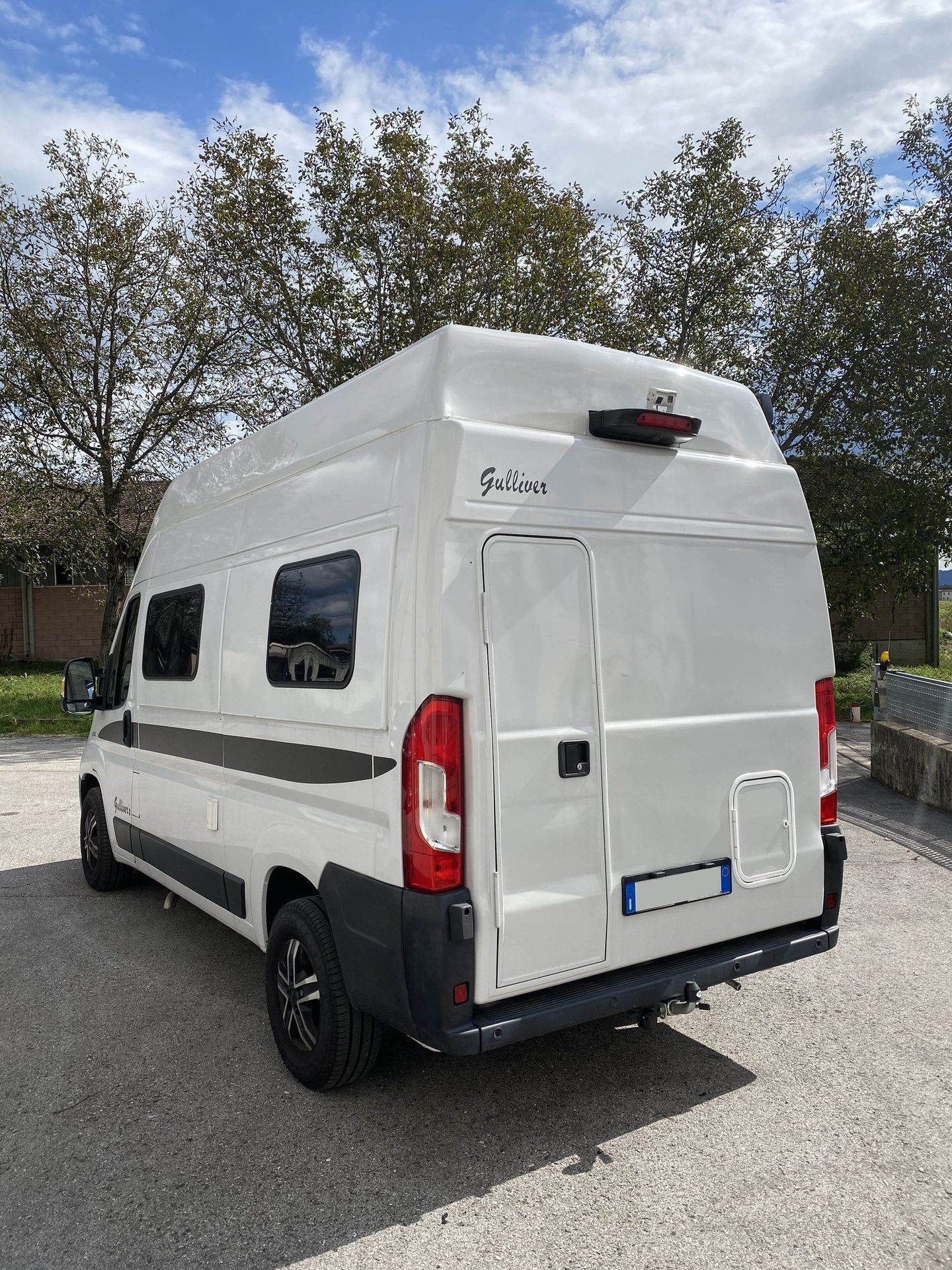
Utopia is the only camper van with a hybrid sheet-metal and fibreglass body, replacing metal exactly where the cold gets in. Roof and side panels in fibreglass, rear doors done away with altogether, and an internal plastic lining that leaves not one bare metal surface inside. The result is a continuous, insulated shell with no thermal bridges: insulation with no equal in the category, and more living space than vans a good deal longer.
The lowest drop-down bed on the market
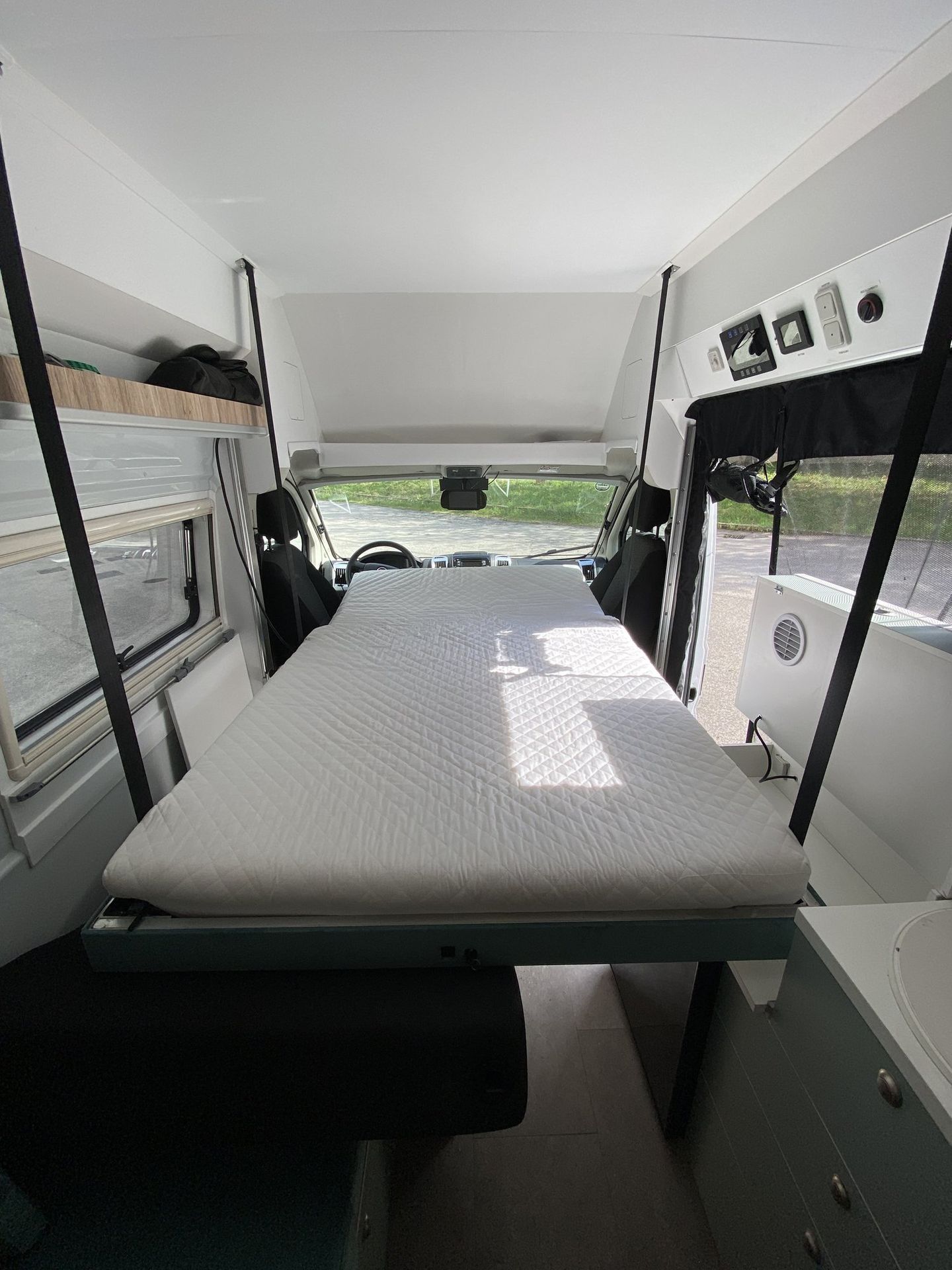
The electric drop-down bed retracts into its dedicated fibreglass roof and comes down until the mattress sits 90 cm above the floor: the lowest on the market. A real 195x140 cm double, always made. It can drop that low because the induction kitchen block slides aside to let it through. By day it disappears into the roof, by night it comes back down in seconds.
Family: four berths, same footprint
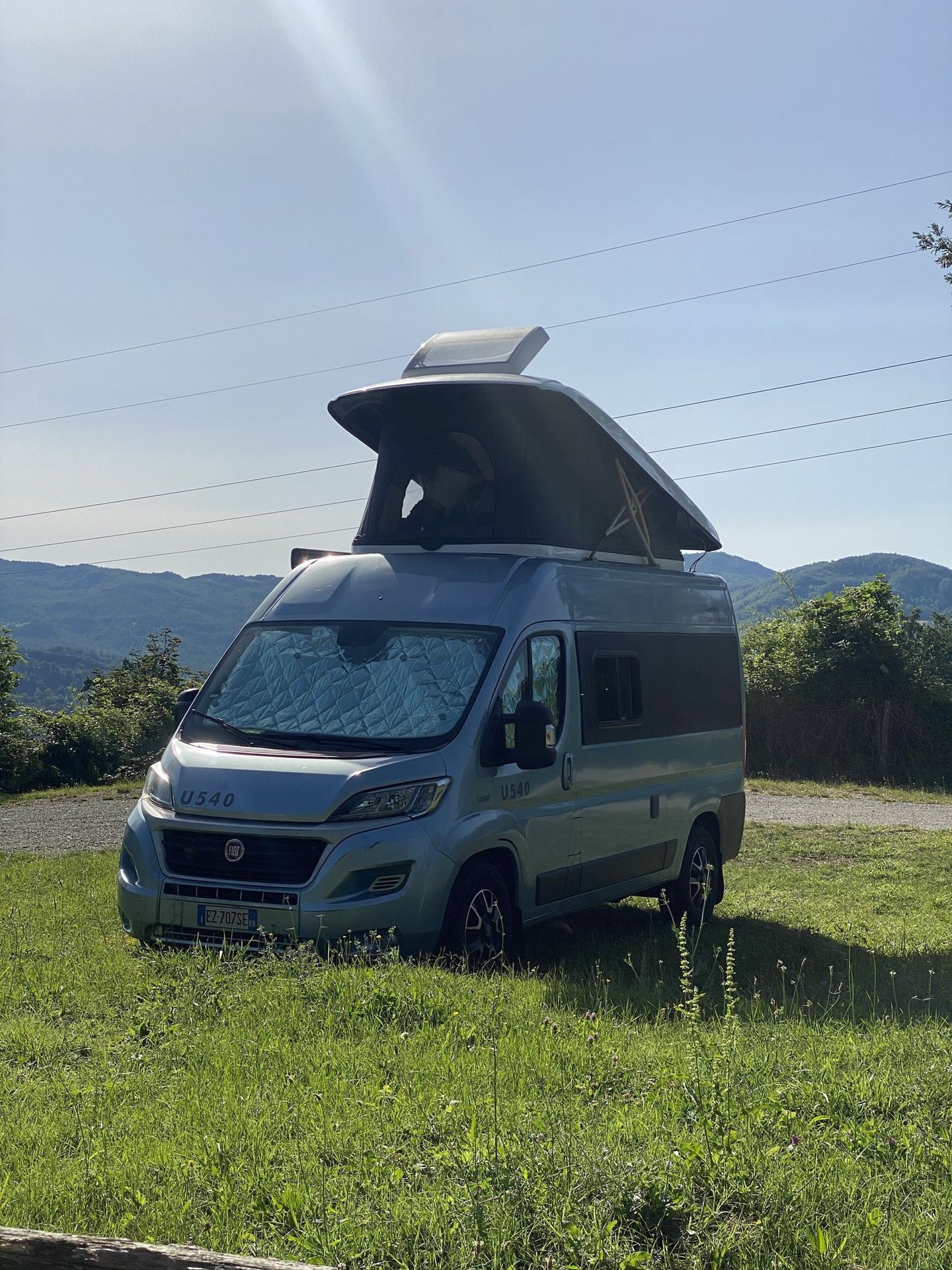
In the Family version the sofa bed gives way to electrically operated bunk beds, which make the load area modular: four genuinely comfortable berths in 5.40 metres, something very few camper vans pull off. At the front you choose between the fibreglass roof with drop-down bed and the SkyUp pop-top, 100% made in Italy, with its own dedicated heating and summer and winter canvas supplied.
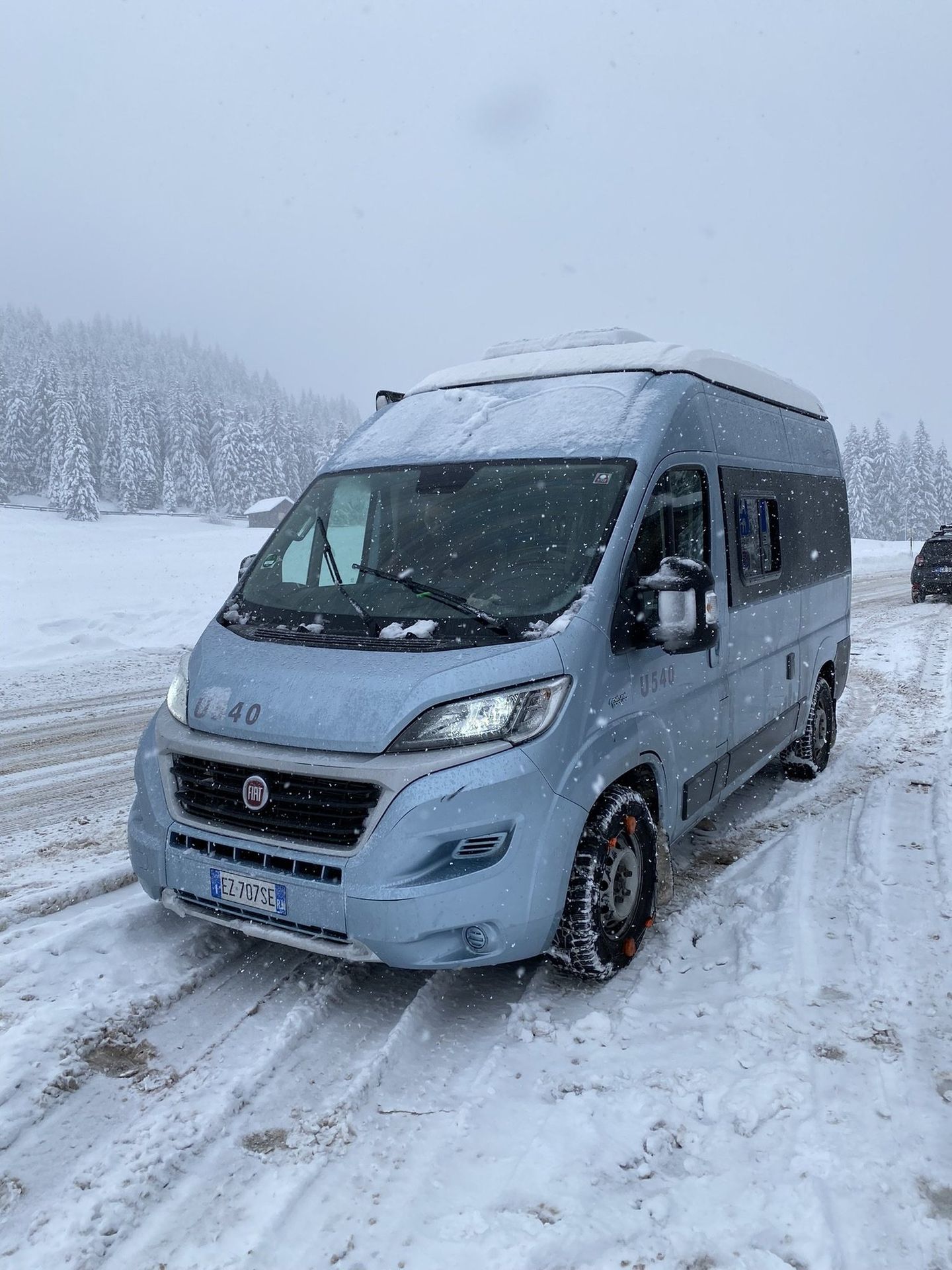
GULLIVER WINTER SYSTEM: BUILT FOR WINTER
Winter is where Utopia belongs. The Gulliver Winter System heats from the floor and spreads the warmth through radiators: no fans, no dry air, no cold corners and no condensation on the windows. Choose the SkyUp pop-top and you also get a dedicated, independent heating system for the canvas, with summer and winter covers supplied: you can sleep up top even in a hard frost.
The models
Two ways of living on board, on the same compact base.
UTOPIA 540 LOUNGE
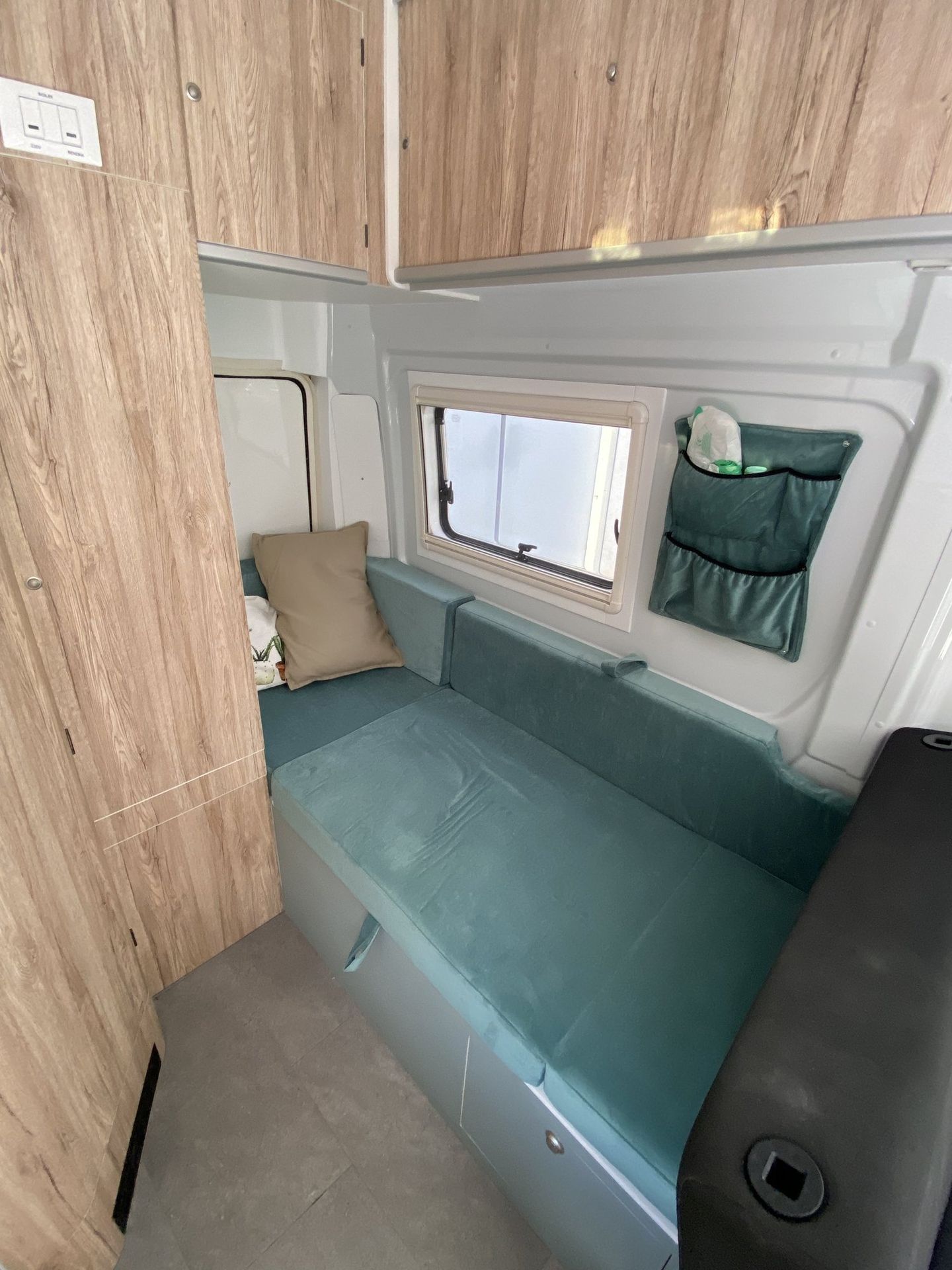
The only 5.40-metre camper van with a drop-down bed, a sofa and a full-size wardrobe. For two: drop-down bed at the front, a generous sofa bed always made at the rear, and a full fibreglass bathroom. With the Gulliver Winter System it is a camper for the whole year.
Discover the model →UTOPIA 540 FAMILY
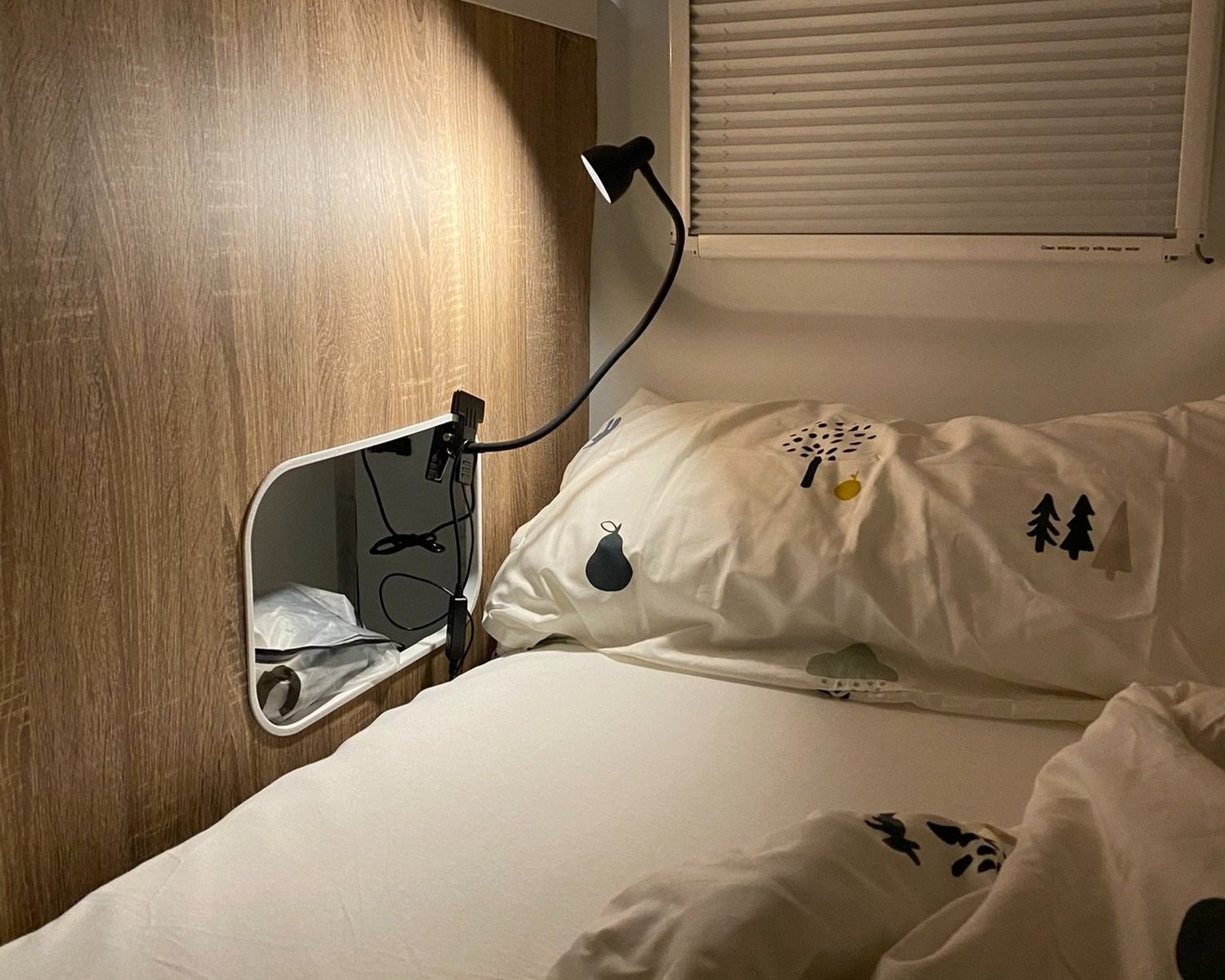
Four genuinely comfortable berths in 5.40 metres, and very few camper vans manage it. Electric bunk beds at the rear and, at the front, drop-down bed or SkyUp pop-top with its own dedicated heating. Gulliver Winter System here too: underfloor heating and radiators.
Discover the model →Looking for zero emissions at the tailpipe? That is a different vehicle: discover PURA, the full-electric Gulliver →
Frequently asked questions
Petrol and LPG against a modern diesel: the questions people ask us most often.
Can I have it on petrol only?
Yes. Utopia is born petrol: the ProMaster is the petrol-native version of the Stellantis van family. The LPG system is fitted at your request, so you decide whether you want one fuel or two.
Why is Utopia petrol/LPG and not diesel?
Because a camper lives the opposite of the way a modern diesel wants to live: short trips, plenty of cold starts, weeks standing still. Utopia's Otto-cycle engine has no particulate filter to regenerate, no EGR valve to clog up, no AdBlue to top up. What counts as major maintenance on a diesel simply does not exist here.
Do I have to worry about AdBlue?
No: Utopia does not use it. No tank to top up, no fluid that expires a year after opening, no crystallisation in the cold. And above all no countdown: on a diesel, a fault in the SCR injector, pump or sensor blocks starting once the courtesy kilometres run out, and leaves you exactly where you are.
What about the particulate filter? Will it clog if I only take short trips?
There isn't one. On a diesel the DPF has to be regenerated while driving: switch the engine off mid-regeneration - which happens constantly in a camper, because you arrive and you stop - and the cycle breaks off, clogging the filter a little more each time. On Utopia the question never arises: you can drive fifty kilometres and stay put for three days without the engine minding at all.
I don't use the camper much. What am I risking?
On a diesel, a great deal: interrupted regenerations push unburnt fuel into the engine oil, diluted oil lubricates worse, and the first component to suffer is the turbo; the EGR valve and the intake manifold fill with carbon deposits. Utopia has none of these parts in the critical path: it is a simple engine that starts, warms up and works even after weeks of standing.
Does the fuel freeze in winter?
Diesel starts forming wax below -2 °C and clogs the filter; winter grade holds to around -12 °C and arctic grade to -20 °C, but you have to know it in advance and fill up in the right place. Petrol and LPG have no such problem: no wax, no additives, no filter closing up at the worst moment. For Utopia, built as a winter camper, that is not a detail.
If it stands for months, does the fuel spoil?
Diesel does: condensation water, temperature swings and the bio content create the conditions for microbial growth - the so-called diesel bug - which forms sludge at the bottom of the tank and clogs filters and injectors. It is a classic problem of vehicles left standing with a half-empty tank, which is to say campers. LPG sits in a sealed pressurised tank and does not degrade; petrol stays clean.
With LPG can I drive when traffic restrictions are in force?
Yes, and it is one of the reasons we chose this route. In restricted-traffic areas diesels are always the first to be shut out, and the rules will only tighten. LPG is among the fuels most widely tolerated by municipal measures and by European low-emission zones. The rules change from town to town, so it is always worth checking those of the city you are heading for.
What is the range, and will I find LPG on the road?
With both tanks full you cover more than 1,300 km of combined range. LPG has a dense network in Italy and across much of Europe, and when you cannot find it you switch to petrol without stopping: the two fuels take turns, they do not rule each other out.
What about fuel consumption and emissions?
On LPG the running cost comes down: LPG is cheaper than diesel, and on a vehicle covering thousands of kilometres a year that difference adds up. At the tailpipe gas is cleaner than diesel: no diesel particulate and significantly lower nitrogen oxides, which is why LPG is still allowed where diesels are stopped. On petrol, consumption is in line with a diesel of the same weight and the cost per kilometre stays comparable or lower, because there is no AdBlue to buy and none of the maintenance the after-treatment system brings with it.
Does an LPG camper have the power of a diesel?
More. The ProMaster's 3.6 V6 Pentastar is rated at 276 hp and 339 Nm of torque, paired with the nine-speed automatic. The most powerful diesel in the class, the 180 hp 2.2, stops a hundred horsepower lower: on a climb or on the motorway, fully loaded, you feel it. A diesel delivers peak torque further down the rev range, but the nine ratios keep the V6 in the right band and there is no turbo that has to wake up first.
Does the engine suffer running on gas?
No, because this is not a conversion bolted onto an engine born as a diesel. The ProMaster is the petrol-native version of the Stellantis van family and leaves the factory with valves specifically designed for LPG: the gas works on an engine built to take it.