ELECTRICAL SYSTEMS
Our 12 V systems and the new 48 V ones: how we design on-board energy independence to be efficient and to last.
The video
Watch the video, then read the details below
What energy independence really means
Energy independence in a motorhome does not simply mean having bigger batteries. It means being able to actually use that energy, to recharge it in reasonable times and not to be constantly limited by your own vehicle.
The way we travel has changed: more and more people want to stay off-grid and at the same time run the air conditioner, charge their e-bikes, use the washing machine, the coffee machine and an induction hob. Bigger battery capacity alone is not enough: if the system cannot recharge effectively, the limit stays where it was.
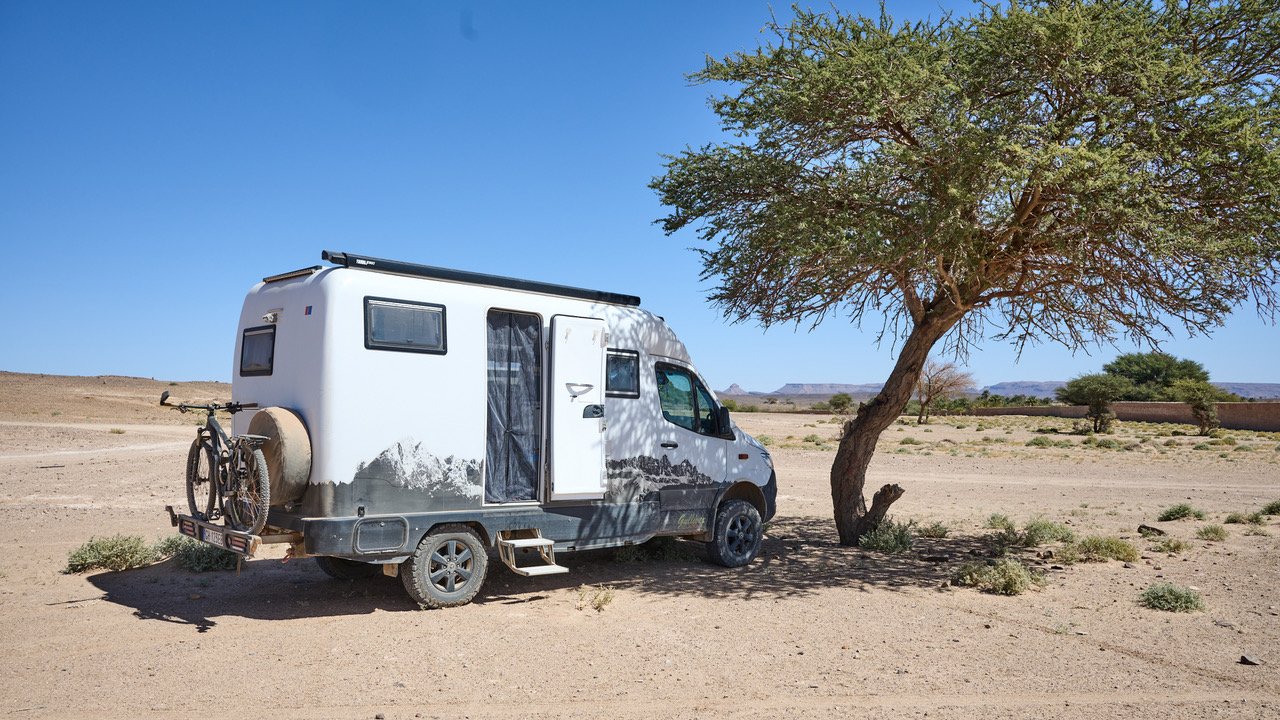
The 12 V system: our standard platform
On our standard vehicles the architecture is the classic, well proven one: the vehicle alternator charges the 12 V starter battery; from there a DC/DC charger feeds the lithium house battery, which powers every 12 V appliance in the motorhome and, through an inverter, also the 230 V devices.
Vehicle alternator
It charges the 12 V starter battery while driving.
DC/DC charger, 50 A
It moves energy from the starter battery to the house battery.
LiFePO4 lithium 12 V, from 300 Ah
Lithium iron phosphate: it powers every 12 V appliance in the motorhome.
Inverter
It provides the 230 V for the appliances on board.
For many travellers this configuration is already more than enough, whatever the type of use. It is not a fallback system: it is a correct, widespread architecture, well suited to most journeys.
Where 12 V starts to limit you
The problem appears when use becomes more intense: more autonomy, heavier appliances, more frequent off-grid stays, less dependence on gas. Not because 12 V is wrong, simply because it was designed for a different need.
Charging time
You can increase battery capacity up to very large packs, but if charging stays tied to the power of the DC/DC charger and of the original alternator, the time needed to recover that energy becomes very long. A concrete example: a 300 Ah pack with a 50 A DC/DC charger needs about 6 hours of driving for a full recharge. The bigger the pack, the longer the time.
Current distribution
At 12 V, handling high power means pushing very high currents: large cable cross-sections and great care with the distance between components. If batteries, inverter and charging system sit far apart, part of the energy is lost along the way and turns into heat: less efficiency and more stress on the system.
One of the most common mistakes is placing components where it is most convenient or looks best, instead of where they actually work efficiently. When we talk about autonomy the question is not only how much energy I can store, but how well I manage it.
Why we chose 48 V
This is where Gulliver's work on 48 V systems comes from, developed within a technical partnership of the highest level. The principle is simple and purely technical: raising the voltage moves more power with lower currents.
Smaller cables
Smaller cross-sections than an equivalent 12 V system, at the same power.
Fewer losses
Less energy lost along the way and turned into heat.
Heavy appliances
Air conditioner, electric cooking and powerful inverters handled with margin.
Fast charging
Energy recovered while driving in far shorter times.
48 V does not replace what is already on board. Our systems include a 48/12 DC/DC converter that powers the standard 12 V appliances of the motorhome as usual. It is not about making the vehicle more complicated, but about building a more efficient energy base, able to support the modern use of a motorhome.
Charging while you drive
This is the most concrete advantage of the 48 V system. The battery pack is charged by an additional 48 V alternator, dedicated to it alone and independent from the vehicle's standard alternator.
The charging capacity of the additional 48 V alternator.
The energy held in a traditional pack, as a reference.
With the 48 V system that same energy comes back in about an hour of driving.
The same recovery with a 50 A DC/DC charger takes a full day of driving.
This changes the daily use of the motorhome. Picture a hot summer day on the way to the sea: at midday you stop, switch on the air conditioner, cook on the induction hob, warm something in the microwave, make coffee after lunch and rest in the cool. Then you set off again: even a short leg immediately puts the energy balance back in the black.
You are no longer forced to switch everything off for fear of using too much. You use the vehicle naturally, knowing the system was designed to support that kind of use.
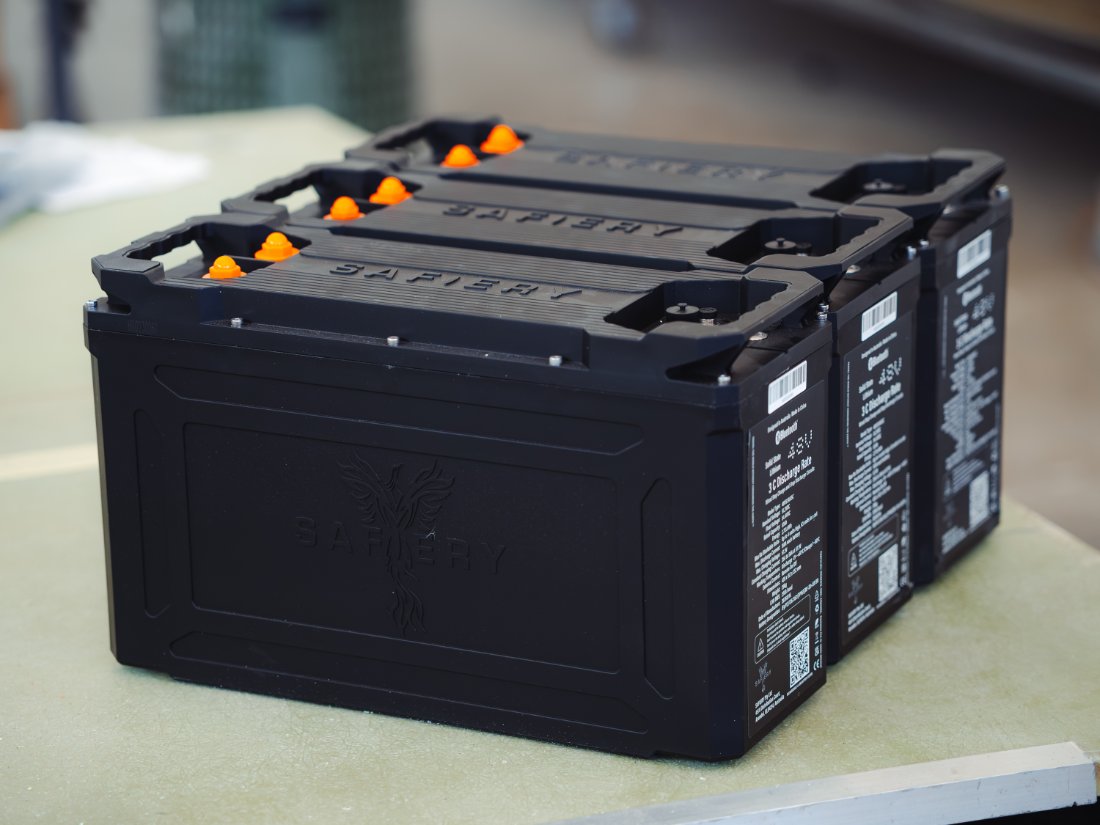
Storage
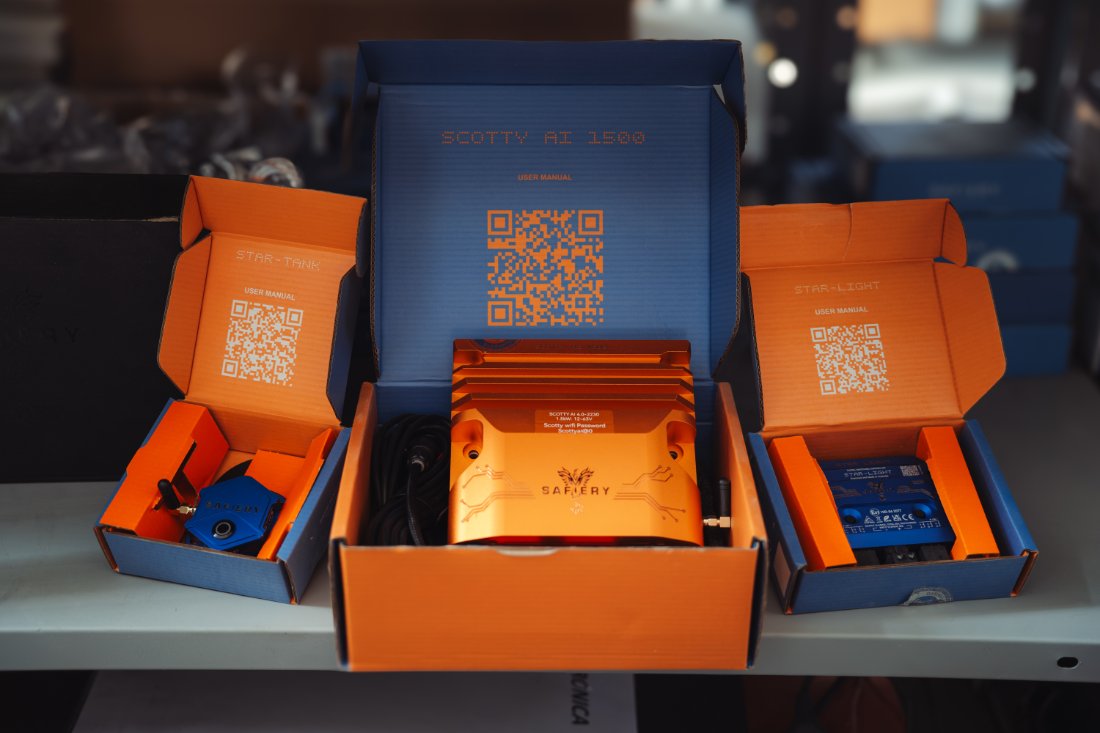
Safiery
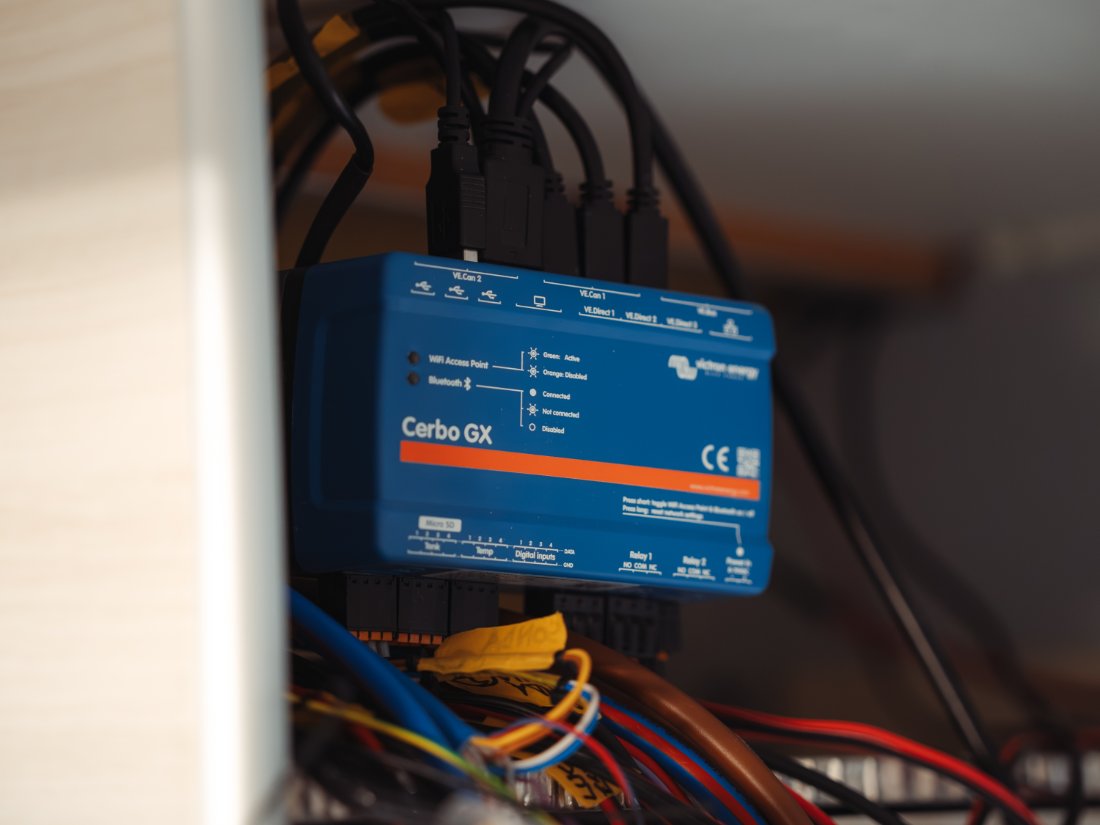
Victron
The capacities available
The 48 V battery packs come in three sizes, chosen according to how the customer really uses the motorhome.
Native standard equipment on the whole Terra range from model year 2027.
Intense off-grid use and air conditioning through the night.
Long stays without shore power and heavy appliances.
As a reference: a traditional 12 V, 300 Ah pack holds 3.6 kWh.
Solid-state cells
The 48 V packs use Safiery solid-state cells. The anode is metallic lithium and the electrolyte is reduced to a 3-5% wetting agent, with ceramic wafers held in a steel frame inside an ABS case. Remove the mass of liquid electrolyte and you remove what burns.
The cell holds up to 130 °C without consequences.
Charge and discharge cycles: a lifetime of travelling.
At 1C. Charge efficiency is 100% at 0.2C: almost nothing is lost as heat.
Continuous discharge at 3C: enough for the heaviest appliances on board.
Safer than a traditional lithium cell
An 8 mm nail through it
Penetration at 25 mm/s with no resulting safety danger: where a traditional cell would go into thermal runaway, this one keeps working.
A 60 minute short circuit
A prolonged short circuit, the situation every installer fears most, does not turn into a fire.
A 200 kN crush
Twenty tonnes of pressure on the pack. It matters in the one scenario nobody wants to think about: a serious accident.
Twice the charging voltage
A charger fault does not become an emergency.
Abuse tests declared by the manufacturer. Charging window from -5 °C to 55 °C; five year warranty on a CAN monitored system.
One bus, one language
Safiery and Victron are not two worlds coexisting on board: they talk to each other on the same CAN bus. The battery tells the chargers what it needs, instead of being charged by guesswork.
A Victron compliant BMS
The Safiery CAN BMS integrates natively with Victron GX devices: charge voltages and currents come from the battery itself, in real time, not from a preset table.
Up to 63 packs on one bus
Capacity grows by adding packs on the same CAN bus, without redesigning the system.
It tunes itself
Scotty AI moves power both ways and tunes automatically to the alternator, protecting it as demand changes.
Switches and tanks, same screen
The digital switching keypads and the tank sensors send levels, temperature and status to the Victron GX: one screen for the whole vehicle.
One protocol means one source of truth: no black boxes, no duplicated apps, and a system we can read and diagnose remotely.
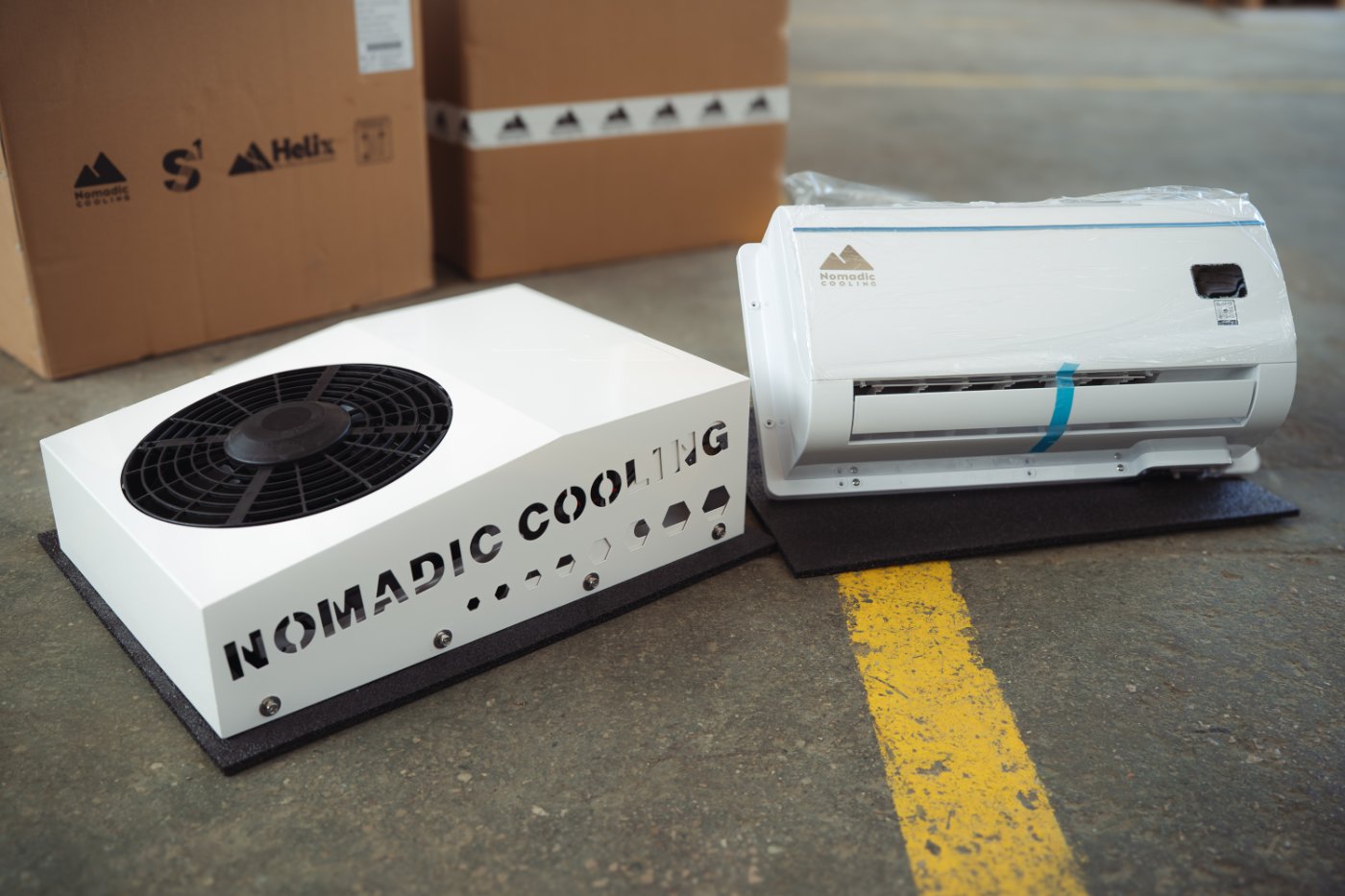
An even more efficient air conditioner, for comfort without a second thought
The 48 V system can comfortably run a high-efficiency air conditioner connected straight to the battery pack, without going through an inverter. That avoids one energy conversion, and with it the extra consumption every conversion brings. On the road it translates into real comfort: running the air conditioning while parked is no longer something to ration.
What you can use on board
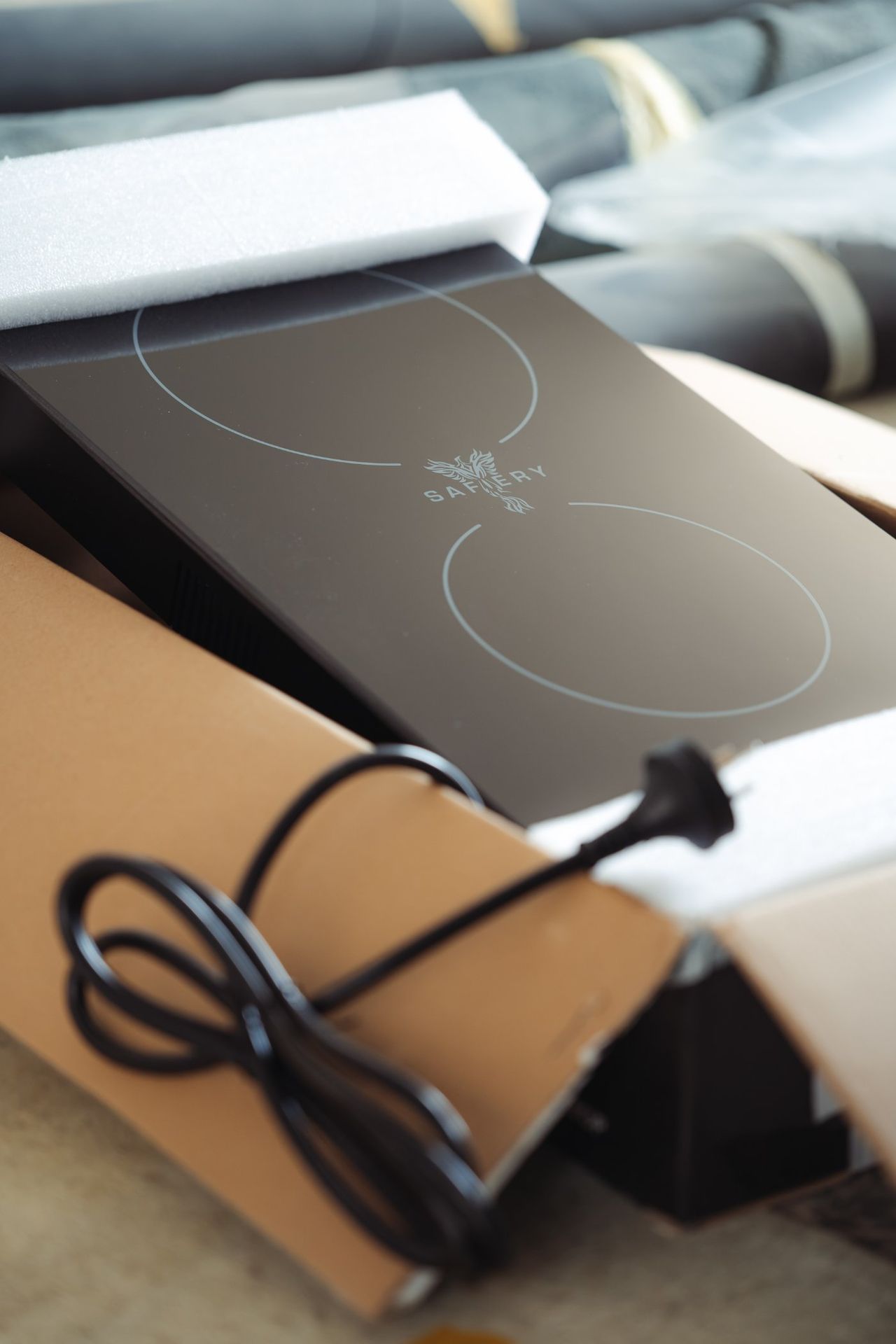
With a more advanced system you can comfortably use the everyday 230 V devices, the ones we are all used to at home.
- High-efficiency air conditioner
- Induction hob and microwave oven
- Coffee machine and air fryer
- Washing machine
- Hair dryer
- Computer and television
- E-bike chargers
People who choose a Gulliver's motorhome are looking for a vehicle organised for modern life, with no worries and no giving up the comforts they are used to.
On which motorhomes
Terra range
From model year 2027 the 48 V system is native standard equipment on the whole range: 6 kWh pack and 3 kW alternator. The 9 and 12 kWh packs are optional.
Strada range
Available as an optional configuration.
Utopia and Custom
Available as an optional configuration.
Pura range
Solar self-charging system with range extender.
The technical partners
The system comes from a technical partnership at the highest level with Safiery, an Australian company specialised in electrical systems for living vehicles, and it integrates with Victron Energy management electronics.
Safiery
Solid-state lithium batteries in 48, 24 and 12 V; BMG bidirectional 48 V alternator with over 2 kW already at engine idle and up to 10 kW peak, at 90% efficiency; Scotty AI bidirectional DC/DC converter of 1.5 and 3 kW at 94% efficiency; native integration with Victron GX devices.

Victron Energy
Conversion, management and monitoring of on-board energy: it is the standard our monitoring relies on, with data and tank levels read from a single point.

Looking ahead, we are working on lithium batteries with higher charge density and greater safety in use.
Frequently asked questions
What is the difference between a 12 V and a 48 V system?
The working voltage of the battery pack and of the power side. For the same energy carried, a higher voltage means lower currents: smaller cable cross-sections, fewer losses along the way and more margin for heavy appliances. 12 V stays for all the standard appliances of the motorhome.
Does 48 V replace the 12 V of the motorhome?
No. A 48/12 DC/DC converter powers all the 12 V appliances as usual: lights, water pump, fridge, controls. 48 V is the energy base underneath, not a change of the whole system.
How long does it take to recharge while driving?
With the additional 48 V alternator you recover about 3 kWh in one hour of driving. As a reference, the energy of a traditional 12 V, 300 Ah pack (3.6 kWh) comes back in a little over an hour, against the roughly 6 hours a 12 V system with a 50 A DC/DC charger would need.
How much capacity can I have on board?
The 48 V packs are available in 6, 9 and 12 kWh. The choice depends on how the motorhome is used: the kind of stops, the season, the appliances you want to keep running.
Can I keep the air conditioner running off-grid?
That is exactly the problem this work started from. The high-efficiency 48 V air conditioner connects straight to the battery pack, with no inverter and none of the loss every conversion brings; charging while driving then puts the energy balance back in order.
Do I need a generator?
No. The system is designed precisely to do without one: energy is produced while driving, by the additional alternator, and stored in the 48 V pack.
How do I know which configuration is right for me?
We talk it through together before configuring the vehicle. There is no system that fits everyone: it is sized on real use, without pointless oversizing and without falling short where it matters.